
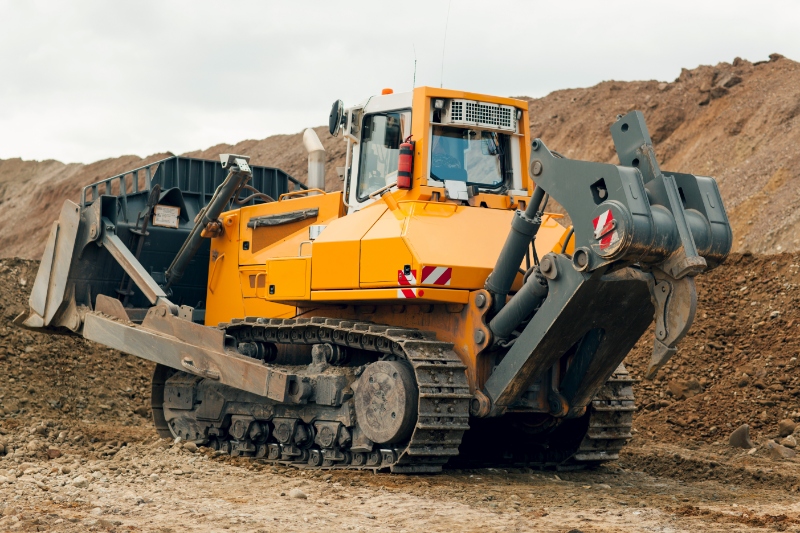
Bull-Dozers (BDZ)

VHIREL Equipment

Bull-Dozers (BDZ)

Definition:

A Bulldozer is a heavy-duty piece of machinery that is primarily used in construction, mining, road building, and other industries where significant earthmoving, ground leveling, or obstacle clearing is required. Its robust design and powerful performance make it an invaluable asset for a diverse client base, from small contractors to large enterprises, and it's widely recognized and respected by industry experts.

At the heart of a bulldozer's design is a broad, flat blade at the front, used to push material around, and in many models, a ripper at the back, used to break up hard ground or pavement. The machine is designed to handle tough environments and heavy loads, making it ideal for tasks that involve moving a large amount of material over short distances.

Key components of a Bulldozer include:

Blade: This is the large, heavy plate at the front of the bulldozer, used to push and move material. The blade is typically controlled hydraulically, allowing it to be lifted, lowered, and tilted as required.

Ripper: Located at the back of the bulldozer, the ripper is a claw-like device used to break up hard ground, rocks, or pavement. Not all bulldozers are equipped with rippers, but they are common on larger models.

Tracks: Unlike many other types of heavy machinery, bulldozers usually move on tracks rather than wheels. These tracks distribute the bulldozer’s weight over a large area, reducing ground pressure and enhancing mobility on soft or slippery surfaces.

Operator’s Cab: The operator’s cab houses the controls for the machine. In modern bulldozers, these are often computer-assisted for improved precision and ease of use.

Engine: Bulldozers are typically powered by a large diesel engine, providing the power necessary for the demanding work they perform.

Bulldozers are used in a wide variety of tasks that require moving or leveling material, including road construction, site preparation, and mining. They are also used in some forestry applications, for clearing land of trees and stumps.

When selecting a bulldozer, considerations include the size and type of the blade, the presence and type of ripper, the power of the engine, and the size and type of tracks. Given their powerful capabilities and wide range of applications, bulldozers continue to be an essential tool for a diverse client base in numerous industries.

They’re classified by their operating weight, blade width, and the type of terrain they’re designed to navigate. Here are five general classifications:

Light Bulldozers: These typically weigh up to 8,000 kg with a blade width of up to 2 meters. Designed for smooth terrains, they’re typically used for light tasks in landscaping and small construction projects.

Small Bulldozers: Generally, weigh between 8,000 to 14,000 kg with a blade width of 2 to 2.5 meters. These machines are used on various surfaces and are well-suited for small to medium construction tasks.

Medium Bulldozers: Usually weigh between 14,000 to 20,000 kg, with a blade width of 2.5 to 3.5 meters. These machines are designed to handle more demanding tasks on both smooth and rough terrains.

Large Bulldozers: Weighing between 20,000 to 30,000 kg, with a blade width ranging from 3.5 to 4.5 meters. They are designed for heavy-duty tasks on varied terrains, often found in large-scale construction, quarrying, or mining operations.

Heavy-duty Bulldozers: These are the heaviest in the category, often weighing over 30,000 kg with a blade width exceeding 4.5 meters. They’re used for intensive tasks in challenging conditions, capable of handling both smooth and rough terrains.

Health and Safety Considerations for Bulldozers

Operator Training: Operators should have appropriate training on the safe operation of the bulldozer, including how to control it properly and understand its limitations.

Pre-Operation Checks: It’s essential to conduct a thorough inspection of the bulldozer before use, checking for mechanical issues, leaks, and other potential problems. Check the fluid levels, condition of the tracks, blade, ripper, and other critical components.

Load Management: Bulldozers are designed to push heavy loads, but it’s important not to exceed the machine’s capability. Overloading can cause loss of control or tipping.

Stability: Due to their weight and the nature of their work, bulldozers are less likely than some machines to tip over. However, it’s still essential to maintain stability, especially on uneven or sloping ground.

Personal Protective Equipment: Operators should wear appropriate personal protective equipment, including safety boots, a hard hat, and high visibility clothing. In noisy environments, hearing protection may also be necessary.

Worksite Awareness: Be aware of the worksite’s layout and other people and machinery present. This is particularly important when the bulldozer is reversing or operating in a crowded area.

Safety Features: Always use the safety features of the bulldozer, such as seat belts and rollover protective structures (ROPS).

Maintenance: Regular maintenance of the bulldozer is crucial to ensure its efficient and safe operation. Follow the manufacturer’s guidelines for maintenance schedules.

Safe Shutdown: After operation, ensure the bulldozer is parked on level ground and that all moving parts have stopped before exiting the machine.

Hazard Recognition: Always be alert to potential hazards like buried utilities, overhead power lines, steep slopes, or unstable ground.

Emergency Procedures: Ensure that operators and ground workers know the correct emergency procedures in case of an accident.

Never operate the Bull-Dozer under the influence of drugs, alcohol, or when feeling fatigued.