
Forklift (FRL)
VHIREL Equipment
Forklift (FRL)
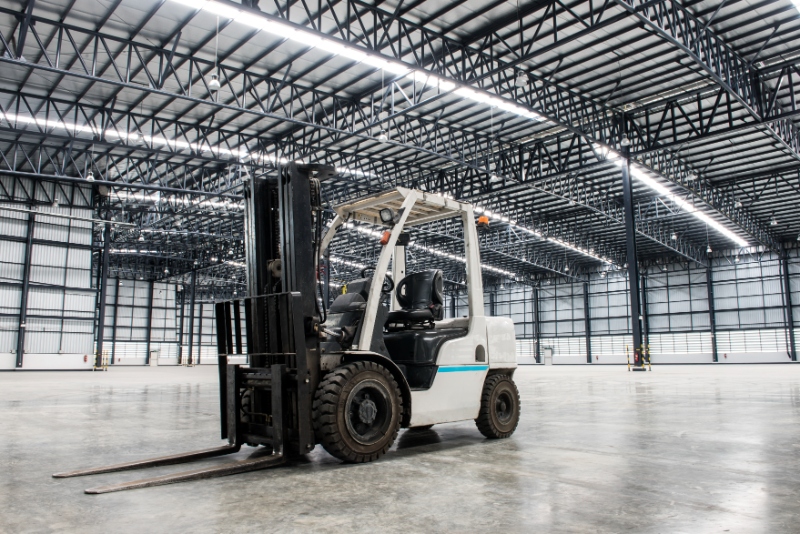
Definition:
A forklift, also known as a lift truck or a forklift truck, is a versatile piece of industrial equipment that is widely used across various sectors, including manufacturing, warehousing, construction, and retail. It's an essential tool for businesses of all sizes, as well as industry experts, thanks to its principal function of lifting and transporting heavy materials over short distances.
Key components of a forklift include:
Mast: The mast is the vertical assembly that does the work of raising, lowering, and tilting the load. It is typically operated hydraulically and can have multiple stages depending on the maximum height required.
Carriage: The carriage carries the forks and allows them to move up and down the mast. It can also tilt to ensure stability and safety when handling loads.
Forks: These are the prongs that slide under the pallet or load to lift it off the ground. The forks can be adjusted to accommodate loads of different sizes.
Counterweight: Located in the rear of the forklift, the counterweight helps balance the load. This is particularly important when carrying heavy loads to prevent the forklift from tipping over.
Cab: The cab is where the operator sits or stands to control the forklift. It includes the steering wheel, controls for the mast and carriage, and pedals for braking and accelerating.
Power Source: Forklifts can be powered by internal combustion engines (diesel, propane, or natural gas) or by electric motors using rechargeable industrial batteries.
The forklift’s compact design and maneuverability make it ideal for use in areas where space is at a premium, such as inside warehouses or cargo containers. Its lifting capabilities and flexibility allow for efficient handling of a broad range of load types and weights, making it indispensable in material handling operations.
Forklifts come in various models and sizes, each designed to suit specific needs and applications. For instance, high-lift models are used in warehouse settings where items need to be stacked at great heights, while rough terrain forklifts are designed for use on uneven surfaces and slopes, such as in construction or agricultural settings.
When selecting a forklift, considerations include the nature of the task, operational environment, lifting capacity, maximum lifting height, and fuel type. With such a broad range of models and features, forklifts cater to a diverse client base and offer solutions for a multitude of industry needs.
Pallet Jacks: Weighing less than 750 kg with a lift height of up to 0.35 meters, these are designed for smooth, indoor surfaces and used for light-duty tasks, primarily moving pallets.
Warehouse Forklifts: Generally weighing between 1500 to 4500 kg with a lift height ranging from 5 to 9 meters. These are primarily used for indoor applications, such as loading and unloading goods and moving them to different sections within a warehouse.
Counterbalance Forklifts: These usually weigh between 1500 to 9000 kg and can reach lift heights between 4 to 6 meters. They’re used in both indoor and outdoor applications, handling loads at high heights.
Rough Terrain Forklifts: Typically weighing between 2700 to 9000 kg, with lift heights from 2.5 to 9 meters, these forklifts are equipped with robust tires for outdoor construction or agriculture use on uneven surfaces.
Telescopic Handler Forklifts: These are the most substantial forklifts, often weighing over 9000 kg, with a lift height exceeding 9 meters. They’re used in construction and agriculture for lifting heavy loads to significant heights, capable of handling rough terrains.
Health and Safety Guidelines for Forklifts
Operator Training: All forklift operators must be adequately trained and certified according to the relevant safety regulations in your jurisdiction. Training should include understanding the controls, safe operation, handling, and loading/unloading of materials.
Inspections: Regular pre-use inspections are essential. The operator should check the brakes, steering, controls, warning devices, mast, tyres and the forklift’s overall condition.
Load Capacity: Never exceed the forklift’s load capacity. Overloading can cause the forklift to tip over.
Operating Speed: Do not drive the forklift too fast. Always adjust the speed according to the driving conditions and load.
Stability: Always ensure the forklift is stable before lifting or moving a load. The load should be evenly distributed on the forks.
Pedestrians: Always give way to pedestrians. Use the horn at intersections or to alert others of your presence.
Personal Protective Equipment (PPE): The operator should always wear appropriate PPE such as safety shoes, hard hat, and high-visibility clothing.
Emergency Measures: Make sure a fire extinguisher is present and functioning. Be familiar with the location of the emergency shutdown system.
Safe Shutdown: When not in use, the forklift should be parked in a designated area with the forks lowered to the ground, the parking brake engaged, the controls neutralized, and the power switched off.
Seat Belt: Operators should always wear the seatbelt when operating a forklift. It can prevent the operator from being thrown from the cab if the forklift tips over.
Work Environment: Be aware of the work environment. Check for ground conditions, overhead obstructions, and the presence of other people or vehicles.
Maintenance: Regularly maintaining the forklift can prevent malfunctions and accidents. Refer to the manufacturer’s manual for maintenance guidelines.
No Extra Riders: Only the operator should be on the forklift. It’s not designed to carry passengers.
Work at Heights: When working at heights, ensure the use of safety harnesses or other fall protection systems.
Never operate the forklifts under the influence of drugs, alcohol, or when feeling fatigued.