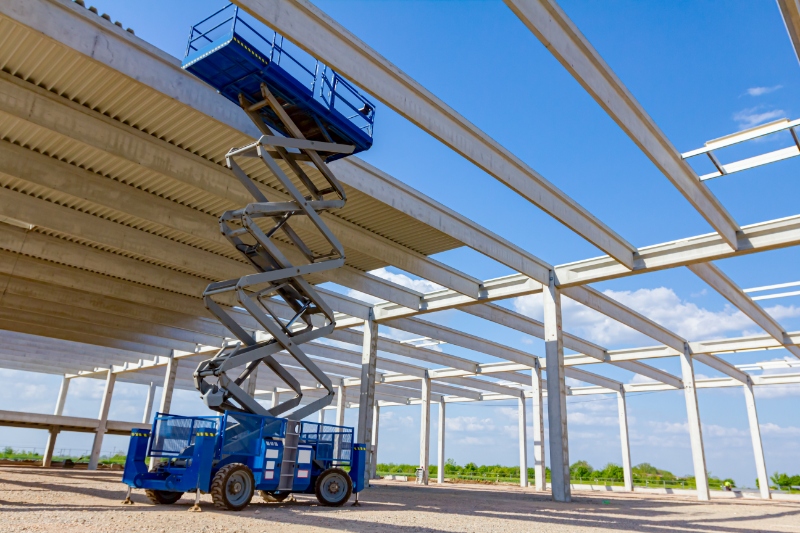
Scissor Lifts (SRL)

VHIREL Equipment

Scissor Lifts (SRL)

Definition:

A Scissor Lift, also known as an aerial work platform or elevating work platform, is a highly useful piece of equipment used across multiple industries such as construction, retail, entertainment, and maintenance. Catering to a diverse client base that includes small businesses, large corporations, and industry experts, the scissor lift is praised for its ability to safely elevate personnel and equipment to significant heights.

The defining characteristic of a Scissor Lift is its crisscross, or 'scissor,' mechanism. When the lift is operated, this mechanism extends, pushing the platform vertically upwards. Unlike boom lifts or telescopic handlers, scissor lifts can only move vertically and are typically used when only height, not horizontal reach, is required.

Key components of a Scissor Lift include:

Platform: This is the workspace that is raised or lowered. It typically includes guardrails for safety and can accommodate personnel, tools, and other materials.

Scissor Mechanism: Composed of a series of linked, folding supports in a crisscross ‘X’ pattern, the extension and compression of this mechanism provide the vertical elevation and descent of the lift.

Base: This contains the motor and wheels or tracks that allow the scissor lift to be moved. The base also provides stability when the lift is in use.

Controls: Controls for operating the lift are usually located on the platform, allowing the operator to raise and lower themselves. Some models may also include controls at the base.

Power Source: Scissor lifts can be powered by an electric motor or a diesel engine, depending on the model. Electric models are typically used indoors, while diesel models are used outdoors and offer more power.

Scissor lifts are commonly used in construction, maintenance, and installation tasks, where workers need to reach high places safely. They are also often used in warehouses for picking orders and in the entertainment industry for rigging lights and sound equipment.

When selecting a Scissor Lift, key considerations include the maximum platform height, load capacity, the power source, and whether the lift will be used indoors, outdoors, or both. With their robust design and secure elevating capabilities, Scissor Lifts are a pivotal tool that meets the needs of a broad array of industries and clients.

Scissor lifts, also known as aerial work platforms (AWPs), are commonly used in construction, maintenance, and other industries for tasks requiring elevation. They’re generally classified by their lift capacity, maximum working height, and the type of terrain they’re designed to navigate. Here are five general classifications:

Compact Scissor Lifts: These typically have a lift capacity up to 250 kg and a maximum working height of up to 6 meters. Designed for indoor use on smooth terrains, they’re primarily used for light tasks such as indoor maintenance or stocking shelves.

Light-Duty Scissor Lifts: Usually have a lift capacity between 250 to 500 kg and a maximum working height of 6 to 9 meters. These lifts can operate on smooth outdoor or indoor surfaces and are well-suited for maintenance or installation tasks.

Medium-Duty Scissor Lifts: Generally, have a lift capacity between 500 to 1,000 kg, with a maximum working height of 9 to 12 meters. They are designed to handle more demanding tasks on both smooth and moderately rough terrains.

Heavy-Duty Scissor Lifts: These typically have a lift capacity between 1,000 to 1,500 kg, with a maximum working height ranging from 12 to 15 meters. They are designed for heavy-duty tasks on varied terrains and often found in construction, industrial settings, or outdoor maintenance tasks.

Super-Duty Scissor Lifts: These are the largest scissor lifts, often with a lift capacity over 1,500 kg and a maximum working height exceeding 15 meters. They’re used for intensive tasks in challenging conditions and capable of handling both smooth and rough terrains.

Health and Safety Considerations for Scissor Lifts

Training: Only trained and authorized individuals should operate scissor lifts. Training should cover operational controls, emergency controls, maximum load capacity, and proper handling.

Pre-operation Inspection: Before use, the scissor lift should be inspected for any defects or malfunctions. This includes checking the brakes, steering, tires, safety devices, controls, and other components as specified in the manufacturer’s guidelines.

Work Area Inspection: The work area should also be inspected for hazards, including holes, drop-offs, slopes, bumps, and debris. Overhead hazards, such as power lines and beams, should also be considered.

Load Limits: Never exceed the load-capacity limits of the scissor lift. Overloading can make the lift unstable and can lead to tipping or collapsing.

Fall Protection: While the guardrails on scissor lifts are designed to prevent falls, additional fall protection equipment like harnesses and lanyards may be required depending on job requirements and local regulations.

Stability: Scissor lifts should always be used on stable, flat surfaces. Using a scissor lift on uneven ground can cause it to tip over.

Weather Conditions: Outdoor use of scissor lifts should be avoided during adverse weather conditions such as heavy rain, snow, or high winds as these can make the lift unstable.

Positioning: The scissor lift should be positioned away from traffic and barricades should be set up to protect the lift from being hit by vehicles.

Safe Operation: The lift should not be moved when it is elevated. The operator should avoid leaning over the guardrails and the lift should never be used as a support for ladders, scaffolds or other items.

Emergency Procedures: All operators should be aware of emergency procedures in case of equipment failure or other hazards.

Maintenance: Regular maintenance and checks should be performed on the scissor lift to ensure it is in good working order. Always follow the manufacturer’s maintenance instructions.

Personal Protective Equipment (PPE): Operators should always wear appropriate PPE such as hard hats, safety boots, high visibility clothing, and depending on the noise levels, possibly ear protection.

Never operate the Scissor-Lift under the influence of drugs, alcohol, or when feeling fatigued.