
Compaction Rollers (CPR)
VHIREL Equipment
Compaction Rollers (CPR)
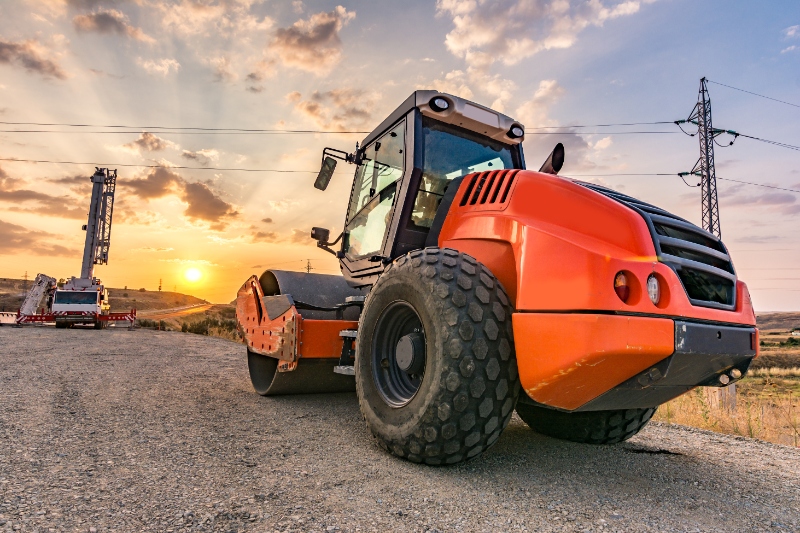
Definition:
A Compaction Roller, also known as a roller compactor or road roller, is a type of engineering vehicle utilized across multiple industries, including construction, agriculture, and waste handling. Appreciated by a broad spectrum of clients, from small businesses to major enterprises, as well as industry professionals, the compaction roller is pivotal for its ability to compress surfaces, creating a smooth, even base.
The primary function of a compaction roller is to condense soil, gravel, concrete, or asphalt in the construction of roads and foundations. The machine works by applying a heavy downward force on the surface, followed by a smooth finish to compress the material to the required density.
Key elements of a Compaction Roller include:
Drum: This is the primary component that exerts pressure on the surface. It can be smooth for asphalt or padded (sheep’s foot) for soil compaction. Some models have a single drum (usually front), while others have two drums (front and rear).
Body: The body houses the engine that powers the machine and includes the operator’s cab.
Operator’s Cab: The cab, which can be either open or enclosed, contains the controls for maneuvering the machine and adjusting the compaction force.
Vibration Mechanism: Many rollers have a mechanism that vibrates the drum, increasing the compaction force. This vibration feature may be selectable, allowing the operator to turn it off when not needed.
Compaction Rollers come in a variety of sizes and configurations, including:
Cylinder Rollers: These have large steel drums and are often used for compacting flat surfaces.
Pneumatic Rollers: These use rubber tires instead of steel drums and are used for sealing surfaces and compacting soil or asphalt layers.
Padfoot or Sheep’s Foot Rollers: These have a drum surface with many small, protruding “feet” and are typically used for compacting soil.
When selecting a compaction roller, one should consider the type of surface to be compacted, the desired compaction level, the size of the project, and specific task requirements. As a crucial tool for surface preparation and compaction, the Compaction Roller serves a wide range of applications, making it a valuable addition to any diverse client base or industry.
Wheels: Skid steers have four wheels, with the left-side drive wheels independent of the right-side drive wheels. This independence allows the machine to pivot (skid steer) on its axis, facilitating tight turn radiuses.
Lift Arms: These arms, attached to either side of the loader, lift, lower, and tilt the attachment. They are hydraulically operated for powerful, smooth operation.
Attachments: A key feature of skid steers is the ability to use various interchangeable attachments, making them highly versatile. These can range from buckets, pallet forks, and augers, to backhoes, trenchers, and grapples.
Operator’s Cab: The operator’s cab, usually enclosed, includes the controls to operate the machine and its attachments.
Engine: The engine, often diesel-powered, provides the power for the loader’s operation and movements.
The small size and agile maneuverability of the Skid Steer Loader make it ideal for tasks in tight spaces where larger equipment wouldn’t fit, such as in buildings or narrow urban spaces. Its ability to use a wide array of attachments further enhances its versatility, allowing it to handle a diverse range of tasks, from digging and lifting to grading, drilling, and more.
When selecting a Skid Steer Loader, factors to consider include the operating capacity, size, power, and the types of attachments needed. As such a versatile and adaptable piece of equipment, a Skid Steer Loader caters to a wide variety of applications, making it a valuable addition to any diverse client base or industry.
They are classified by weight, compaction output, and terrain compatibility. Here are five general classifications:
Light Compaction Rollers: These typically weigh up to 1,000 kg, have a compaction output of up to 30 kN, and are designed for smooth, compact surfaces. They are ideal for small-scale tasks like pavements, cycle paths, and landscaping.
Small Compaction Rollers: These generally weigh between 1,000 kg and 2,500 kg, with a compaction output of 30-50 kN. They are versatile machines used on a variety of surfaces and suitable for small to medium construction tasks.
Medium Compaction Rollers: Weighing between 2,500 kg and 7,000 kg with a compaction output between 50-100 kN, these machines are designed for larger construction sites and can handle smooth to moderately rough terrains.
Large Compaction Rollers: These typically weigh between 7,000 kg and 15,000 kg, with a compaction output of 100-150 kN They are designed for heavy-duty tasks on varied terrains and are often used in large-scale road construction or land reclamation projects.
Heavy-duty Compaction Rollers: These are the most robust rollers, usually weighing over 15,000 kg with a compaction output exceeding 150 kN They’re capable of handling both smooth and rough terrains and are used for extensive compaction tasks in road construction, large construction sites, or landfills.
Health and Safety Considerations for Compaction Rollers
Operator Training: The operator should be well-trained and competent in the use of the Compaction Roller. They should have knowledge of the machine’s operation manual, safety features, and potential hazards.
Pre-Operation Inspection: Before operating the machine, a comprehensive inspection should be performed. This includes examining the drum, body, engine, brakes, hydraulic system, and other critical components.
Safety Equipment: Operators must always wear appropriate Personal Protective Equipment (PPE), such as hard hats, safety glasses, high-visibility clothing, and safety boots. If the Compaction Roller is equipped with a seatbelt, it should be used at all times during operation.
Safe Operation: Operators must ensure they are driving at a safe speed, especially when working on slopes or uneven surfaces. Avoid making abrupt changes in direction, as this could tip the machine over.
Load Capacity: Understand and adhere to the machine’s load capacity. Overloading the Compaction Roller can affect its stability and control, increasing the risk of accidents.
Working Around Utilities: Be aware of underground utilities and overhead power lines when operating the Compaction Roller. Contact with these utilities can lead to severe injuries and damage.
Traffic Management: If the Compaction Roller is being operated near public roads or in an area with other heavy equipment and vehicles, a traffic control plan should be in place to avoid collisions.
Machine Maintenance: Regular maintenance checks as per the manufacturer’s guidelines are essential to keep the machine in good working condition.
Emergency Preparedness: Operators should be trained in emergency response procedures, such as knowing how to quickly stop the machine and how to use fire safety equipment if required.
Bystander Safety: The work area should be kept clear of non-essential personnel to prevent injuries. Always check the surrounding area before moving the machine or changing its operation.
Never operate the Compaction Roller under the influence of drugs, alcohol, or when feeling fatigued.