
Crane-Trucks (CRT)
Crane-Trucks (CRT)
VHIREL Equipment
Crane-Trucks (CRT)
Definition:
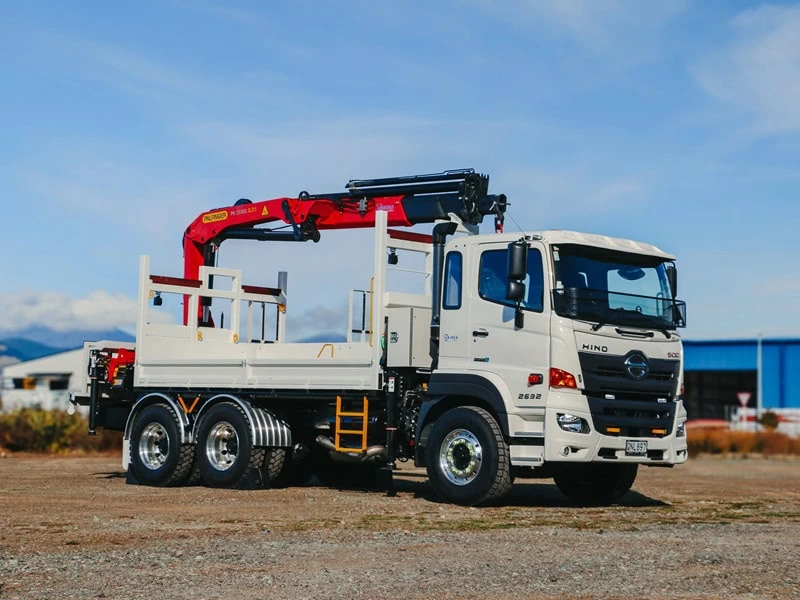
A Crane Truck, also known as a truck-mounted crane, is a multi-functional piece of heavy equipment commonly used across several industries, including construction, transportation, utilities, and more. It is particularly valued by a broad range of clients, from small businesses to large-scale enterprises, as well as industry experts for its versatility and mobility.
Essentially, a Crane Truck is a standard truck chassis that has been modified with a mounted crane mechanism. This unique configuration combines the mobility of trucks with the lifting power of cranes, making it a highly practical and efficient choice for many lifting and loading operations.
The Crane Truck consists of several key components:
Truck Chassis: This forms the base of the crane truck, providing the driving capabilities. It houses the operator’s cab and the engine.
Crane Assembly: This typically includes the boom, the hoist, and other components for lifting and moving loads. The crane can swivel, providing a range of motion for lifting and moving loads around the work site.
Stabilizing Outriggers: These are extendable legs that provide stability when the crane is lifting heavy loads. They prevent the truck from tipping over under the weight of the load.
Operator’s Cab: In some models, there is a separate cab for operating the crane, providing the operator with an optimal view of the working area.
Engine and Hydraulic System: The crane is powered by the truck’s engine, typically diesel, which drives the hydraulic system. This system powers the movement and lifting capacity of the crane.
One of the primary benefits of a Crane Truck is its mobility. It can transport itself to, from, and around the job site without requiring additional transport, unlike static cranes. This makes it ideal for tasks that need crane operations at multiple locations within a short time frame.
Crane Trucks come in various sizes and capacities, from smaller models capable of lifting a few tons, to larger models that can lift several dozen tons. The selection of a Crane Truck largely depends on the lifting requirements, working environment, and specific task demands. With its unique combination of mobility and lifting power, a Crane Truck offers flexible solutions for a diverse client base and wide range of industry applications.
Light-duty Crane Trucks: Typically have a maximum lifting capacity of up to 10 metric tons, with a maximum lift height of up to 20 meters. These are primarily designed for smooth, hard surfaces and used for light lifting and transporting tasks.
Medium-duty Crane Trucks: Generally, have a lifting capacity between 10 to 50 metric tons, with a lift height ranging from 20 to 40 meters. These are used on various surfaces and for moderate lifting requirements in construction, utilities, and logistics.
Heavy-duty Crane Trucks: These usually have a lifting capacity between 50 to 100 metric tons and can reach lift heights between 40 to 80 meters. They’re designed for demanding lifting tasks on construction sites and in heavy industry, handling both smooth and rough terrain.
Super Heavy-duty Crane Trucks: Typically have a lifting capacity between 100 to 500 metric tons, with lift heights from 80 to 120 meters. They are equipped to handle severe lifting tasks on varied terrains in industries such as construction, mining, and energy.
Specialized Crane Trucks: These have lifting capacities over 500 metric tons and lift heights exceeding 120 meters. They’re custom-built for specific high-capacity lifting tasks in industries like wind energy, bridge construction, and heavy-duty logistics, capable of handling a wide range of terrains.
Health and Safety for Crane-Truck Operations
Training and Competence: Operators should be adequately trained and hold a valid certification to operate the specific model of crane truck being used. Training should cover understanding of load capacities, how to control the equipment safely, communication signals, emergency procedures, and the handling of different load types.
Pre-Operation Inspection: Before operating, the crane truck should be inspected to ensure it is in good working condition. This includes checking the hydraulic system, brakes, controls, warning devices, and stability of the truck and crane. Outriggers should also be inspected for proper functioning.
Load Limits: Never exceed the crane’s load capacity as stated by the manufacturer. The weight of the load should be known or calculated before lifting, and the lift should be planned carefully to avoid overloading the crane or tipping the truck.
Operation Area Inspection: The operation area should be checked for potential hazards such as overhead power lines, uneven ground, underground utilities, and people in the vicinity. The area should be marked off and kept clear of unauthorized personnel.
Safe Load Handling: The load should be properly secured and balanced before being lifted. During operation, the load should never be swung or moved abruptly. No one should be allowed to stand under or near a suspended load.
Use of Outriggers: The outriggers should be used whenever the crane is lifting loads. They should be fully extended and placed on stable and solid ground. Outrigger pads or cribbing should be used as needed to distribute the weight and ensure stability.
Personal Protective Equipment (PPE): Operators and other personnel involved in the lift should wear appropriate PPE, such as hard hats, high visibility vests, safety shoes, and gloves.
Maintenance: Regular maintenance of the crane truck is essential. This includes checking and servicing the hydraulic system, engine, tires, and all other components of the truck and crane.
Emergency Preparedness: There should be a clear plan in place for emergency situations, such as a sudden loss of power or control, a person coming into contact with the load, or the truck tipping over.
Communication: Good communication between the operator and ground personnel is critical. Standard hand signals or radio communication should be used to coordinate the lift and ensure everyone’s safety.
Never operate the Crane-Truck under the influence of drugs, alcohol, or when feeling fatigued.