
Excavators (EXC)
Excavators (EXC)
VHIREL Equipment
Excavators (EXC)

Definition:
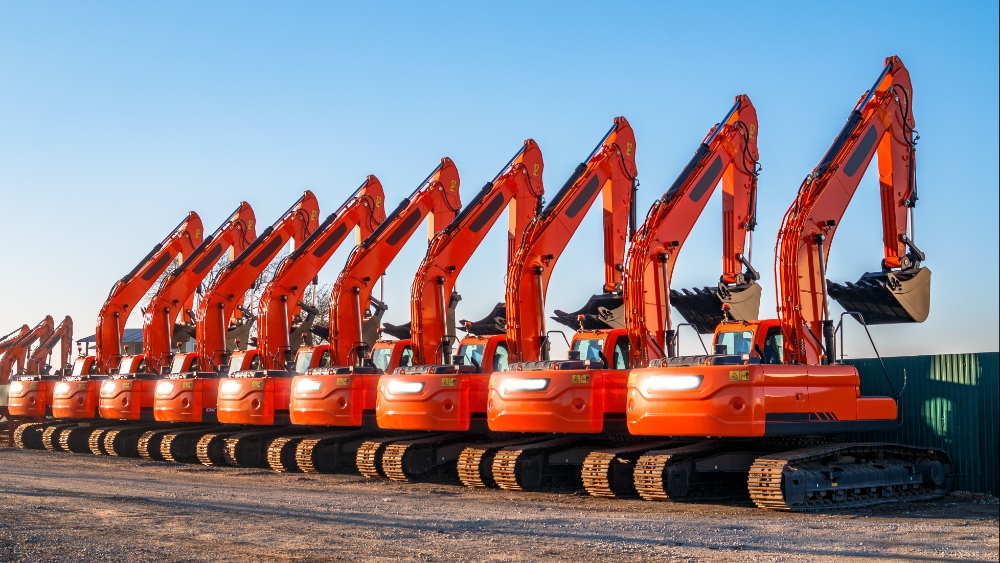
An excavator is a versatile piece of heavy-duty construction equipment designed to handle a wide range of tasks across diverse industries, making it a valuable asset for operators, contractors, project managers, and industry experts. From construction and mining to forestry and agriculture, an excavator's use is nearly ubiquitous due to its robust and multifaceted capabilities.
The primary function of an excavator is to excavate or dig, but its applications extend well beyond. It can perform demolition, river dredging, heavy lifting, and even complex grading for landscape architecture. An excavator's utility is determined by its key components: a cab, an undercarriage, a boom, a stick, and a bucket.
The cab, also referred to as the house, is where the operator controls the machine. It is positioned on a rotating platform, allowing 360-degree manoeuvrability. The undercarriage, equipped with either wheels or tracks, provides mobility and stability. The boom, stick, and bucket - together forming the working arm - are instrumental in excavation and material handling tasks. The bucket's design can be varied to suit the nature of the work.
A key aspect of an excavator's design is its hydraulic system, which powers the working arm. Driven by a diesel engine, the hydraulic system enables the smooth and precise operation of the boom, stick, and bucket, allowing for both heavy-duty work and tasks requiring a high degree of control and precision.
Excavators come in a variety of types and sizes, including mini or compact excavators for small-scale projects or tight working spaces, crawler excavators for stability on uneven terrain, long reach excavators for projects requiring extended reach, and others. Each model and variation bring unique capabilities to cater to the diverse needs of a broad client base. Hence, the choice of excavator hinges on the project requirements, terrain, and desired outcome, offering tailor-made solutions for various industrial applications.
Mini or Compact Excavators: Generally weighing less than 10,000 kg and having a bucket capacity of under 0.05 cubic meters. They’re used for light-duty tasks and in confined spaces.
Small Excavators: Typically weighing between 10,000 to 20,000 kg with a bucket capacity of 0.05-0.2 cubic meters. They’re used for slightly larger projects that require a balance between power and maneuverability.
Medium Excavators: Generally weighing between 20,000 to 45,000 kg and having a bucket capacity of 0.2-0.9 cubic meters. These machines are used for a broad range of tasks in construction, landscaping, and utility work.
Large Excavators: Weighing between 45,000 to 90,000 kg, with a bucket capacity ranging from 0.9 to 2.5 cubic meters. Large excavators are designed for heavy-duty tasks including moving large volumes of material in construction and mining operations.
Ultra-high Demolition Excavators: These are specialized excavators often weighing over 90,000 kg with a variable bucket capacity, outfitted with long-reach arms and tools for high-elevation demolition work.
Health and Safety Guidelines for Excavators
Operator Training: The operator must be well trained in the handling, controls, and safety precautions of the excavator. This includes understanding the machine’s load capacity and limitations to prevent tipping or accidents.
Inspections: Conduct daily pre-operational inspections to check for worn or damaged parts, leaks in hydraulic lines, condition of the undercarriage, and the condition of the bucket and attachments. Post-operation inspections should also be carried out to identify and resolve issues before they become critical.
Personal Protective Equipment (PPE): Operators should always wear appropriate PPE, which may include safety boots, hard hats, high visibility clothing, gloves, safety glasses, and ear protection.
Safe Operation: Operators should ensure that loads are within the machine’s rated capacity. Overloading can lead to instability and increase the risk of tipping. Always ensure that the load is secure before lifting and moving.
Awareness of the Environment: Operators should be aware of the ground conditions and the environment in which the excavator is operating. Be aware of the presence of underground utilities or overhead lines.
Emergency Measures: Ensure that the fire extinguisher is functional and easily accessible. Familiarize yourself with the emergency shutdown system.
Entering and Exiting the Excavator: Maintain three points of contact when entering or exiting the excavator. Avoid jumping off the equipment to prevent injury.
Seat Belt: Always wear a seat belt when operating the excavator. This can prevent injury in case the excavator tips over.
Worksite Awareness: Be aware of people and other equipment in the area. Use a spotter if necessary, especially during operations like lifting or when visibility is compromised.
Safe Shutdown: When shutting down, park the excavator on level ground, lower the bucket or attachment to the ground, set the parking brake, turn off the machine, and remove the keys.
Maintenance: Regular maintenance of the excavator, including the engine, hydraulic system, undercarriage, and attachments, is essential for safe operation.
Safe Digging Practices: Always dig perpendicular to the machine. Never dig under the machine or under its stabilizing structures.
No Extra Riders: Never allow riders on the excavator unless a seat with a seat belt is provided for them
Noise: Be mindful of noise levels during operation. Prolonged exposure to high noise levels can lead to hearing damage.
Never operate the excavator under the influence of drugs, alcohol, or when feeling fatigued.