
Telescopic Handlers (Telehandlers)(TLH)
VHIREL Equipment
Telescopic Handlers (Telehandlers)(TLH)
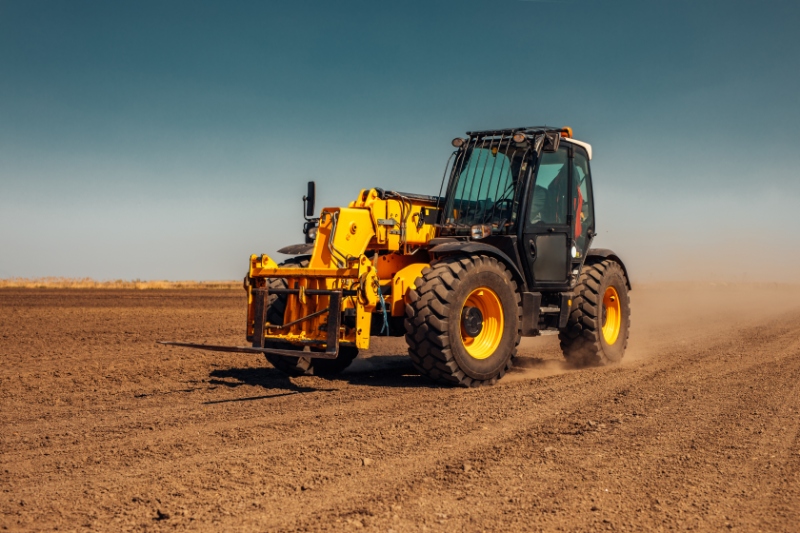
Definition:
A Telescopic Handler, also known as a telehandler, is a versatile piece of heavy machinery used across various industries such as construction, agriculture, mining, and more. From small scale operations to larger corporate entities, as well as industry experts, the telehandler is highly valued for its multi-functional capabilities and reach.
At its core, a Telehandler combines the features of a forklift and a crane into one powerful machine. It consists of a rotating, extendable boom that can reach heights and distances that other machines cannot, making it a flexible and efficient solution for numerous tasks.
Here's an overview of the crucial components of a Telescopic Handler:
Rotating Extendable Boom: The boom can extend forward and upward, providing remarkable reach. The rotation capability varies with different models, with some able to rotate a full 360 degrees.
Attachments: A key feature of a telehandler is the ability to change attachments at the end of the boom, thereby adapting the machine’s functionality to specific tasks. These can range from forks, buckets, and lift tables, to muck grabs, winches, and jibs.
Chassis and Wheels: The chassis and wheels provide stability and maneuverability. Some telehandlers have four-wheel steering for increased flexibility in tight spaces.
Operator’s Cab: The cab houses the controls to operate the machine and its attachments. In some models, the cab may rotate along with the boom.
Engine: Typically diesel-powered, the engine drives the wheels and powers the hydraulic system that operates the boom and attachments.
Telehandlers are often used in situations where the height and reach of a crane are required, but the lifting and maneuverability of a forklift are also beneficial. They can lift heavy loads to significant heights, reach over obstacles, and place loads in positions that would be challenging for other equipment.
When choosing a Telehandler, factors to consider include the maximum lift capacity, reach, and height, the types of attachments required, and the operating environment. Thanks to its versatility and multi-functional capabilities, the Telescopic Handler is a valuable asset for a diverse client base across various industries.
They’re typically classified by their lift capacity, maximum lift height, and the type of terrain they’re designed to navigate. Here are five general classifications:
Compact Telehandlers: Generally, have a lift capacity up to 2,500 kg and a maximum lift height up to 6 meters. These are designed for smooth terrain and are commonly used in small construction sites or agricultural tasks.
Light-duty Telehandlers: Typically have a lift capacity between 2,500 to 4,000 kg and a maximum lift height of 6 to 9 meters. These machines are versatile, designed to operate on various surfaces and used in construction or farming.
Medium-duty Telehandlers: Usually have a lift capacity between 4,000 to 6,000 kg, with a maximum lift height of 9 to 12 meters. These machines are designed for demanding tasks on both smooth and moderately rough terrains.
Heavy-duty Telehandlers: These typically have a lift capacity between 6,000 to 8,000 kg, with a maximum lift height ranging from 12 to 15 meters. They are designed for large-scale tasks on varied terrains, often found in large construction, industrial settings or ports.
Super-duty Telehandlers: These are the largest telehandlers, often with a lift capacity over 8,000 kg and a maximum lift height exceeding 15 meters. They’re used for intensive tasks in challenging conditions and capable of handling both smooth and rough terrains.
Health and Safety Considerations for Telescopic Handlers
Operator Training: Operators should have proper training in using the telehandler, including understanding load limits, operating controls, and safety equipment. They should also be aware of the machine’s limitations.
Pre-Operation Inspection: Conducting a thorough inspection before operation is crucial to identify any potential mechanical issues. This includes checking the hydraulic system, tires, brakes, steering, and other critical components.
Load Management: Understanding the machine’s load chart is critical, as exceeding the load limit can cause tip-overs. The load capacity decreases as the boom extends and raises, and this must be taken into consideration when handling loads.
Ground Conditions: The ground on which the telehandler operates should be stable and level. Operating on uneven or unstable ground can lead to machine instability.
Attachments: Only use attachments that are designed and approved for the specific telehandler model. Each attachment can affect the machine’s performance and load capacity differently.
Stability: When lifting loads, keep them as low as possible to increase the machine’s stability. Avoid sudden or abrupt movements, which can destabilize the machine.
Safety Equipment: Operators should wear appropriate personal protective equipment (PPE) such as hard hats, safety shoes, high-visibility clothing, and safety glasses.
Work Area: The work area should be clear of bystanders before operating the telehandler. Use a spotter if necessary to ensure the safety of the surrounding area.
Overhead Hazards: Always check for overhead obstructions and power lines before raising the boom.
Maintenance: Regular maintenance as per the manufacturer’s instructions is crucial to ensure the machine’s optimal operation and longevity.
Weather Conditions: Pay attention to weather conditions. High winds can destabilize the machine, especially when the boom is fully extended.
Safe Shut Down: Lower the boom and properly secure all attachments before shutting down the telehandler to prevent accidental movement.
Never operate the Telehandler under the influence of drugs, alcohol, or when feeling fatigued.