
Mobile Cranes (MBC)
VHIREL Equipment
Mobile Cranes (MBC)
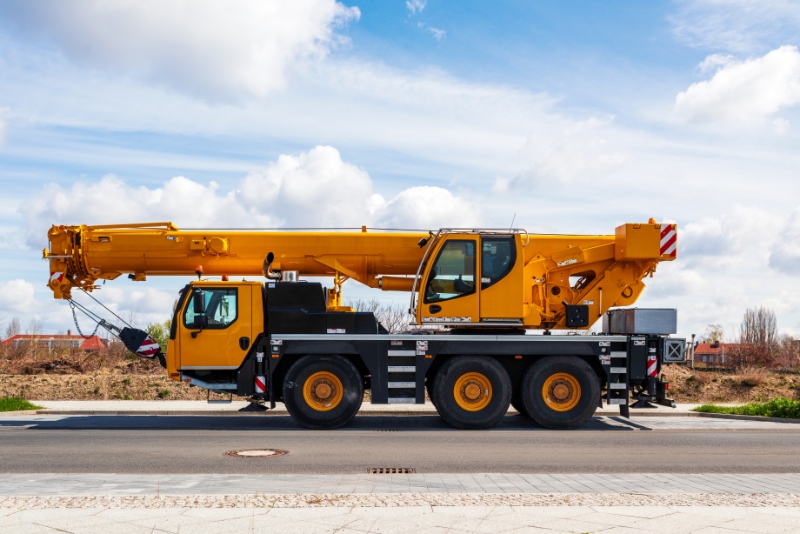
Definition:
A Mobile Crane is a flexible and versatile piece of heavy equipment widely used in a multitude of industries such as construction, transport, manufacturing, and more. Esteemed by various clients, from small firms to major corporations, as well as industry experts, the mobile crane is fundamental for its ability to lift, move, and place heavy objects with precision.
Unlike stationary cranes, Mobile Cranes are designed to be easily transported between job sites without the need for special equipment. This mobility, combined with their lifting capacity, makes them a valuable asset for projects that require heavy lifting over a broad area or across multiple sites.
Key components of a Mobile Crane include:
Boom: This is the crane’s extendable arm, usually telescopic, which allows for adjustable reach and height. The length of the boom dictates the crane’s lifting capacity and reach.
Jib: This is an additional arm that extends from the end of the boom to provide further reach or allow for more complex movements.
Hook: Attached at the end of the boom or jib, the hook is where the load is attached. It is controlled by a system of ropes or chains and pulleys.
Outriggers: These are extendable legs that provide stability when the crane is lifting heavy loads. They prevent the crane from tipping over under the weight of the load.
Control Cabin: This is where the operator sits and controls the crane’s movements. Modern mobile cranes often include computer-assisted controls for precision and ease of use.
Carrier: Also known as the lower, this includes the engine, transmission, and wheels or tracks that allow the crane to move around. The carrier is robust enough to support the weight of the crane and any loads it lifts.
Mobile Cranes are used for a variety of tasks, including lifting materials onto buildings, assembling heavy machinery, loading and unloading heavy goods, and more. Some specialized types of mobile cranes are designed for particular environments or tasks, such as rough terrain cranes for use on uneven ground or truck-mounted cranes for quick setup and transport.
When selecting a Mobile Crane, considerations include the maximum load capacity, boom length, mobility requirements, and specific project demands. As a versatile and efficient lifting solution, Mobile Cranes cater to a diverse range of applications, making them an integral asset in various industries and for a diverse client base.
Mobile cranes are versatile lifting machines used in many sectors including construction, transportation, and industry. They’re classified by their maximum lift capacity, boom length, and the type of terrain they’re designed to navigate. Here are five general classifications:
Small Mobile Cranes: These typically have a maximum lift capacity of up to 10 tons and a boom length of up to 20 meters. Designed for smooth terrains, they’re typically used for light lifting tasks in confined spaces or urban areas.
Medium Mobile Cranes: Usually have a maximum lift capacity between 10 to 50 tons and a boom length of 20 to 40 meters. These cranes can operate on various surfaces and are well-suited for construction or maintenance tasks.
Large Mobile Cranes: Generally, have a lift capacity between 50 to 100 tons, with a boom length of 40 to 60 meters. They are designed to handle more demanding lifting tasks on both smooth and moderately rough terrains.
Heavy-Duty Mobile Cranes: These typically have a lift capacity between 100 to 250 tons, with a boom length ranging from 60 to 80 meters. They are designed for heavy-duty tasks on varied terrains, often found in large-scale construction, industrial settings, or ports.
Super-Duty Mobile Cranes: These are the largest mobile cranes, often with a lift capacity over 250 tons and a boom length exceeding 80 meters. They’re used for intensive lifting tasks in challenging conditions and capable of handling both smooth and rough terrains.
Health and Safety Considerations for Mobile Cranes
Operator Training: It is essential that the operator has the correct training and licensing to operate a mobile crane. They must understand the machine’s controls, features, and limitations.
Pre-Operation Checks: A comprehensive inspection of the mobile crane should be performed before each use. This includes checking for leaks, damages, or mechanical issues, as well as ensuring all controls are functioning correctly.
Load Capacity: Every mobile crane has a specified maximum load capacity. It’s crucial never to exceed this limit. Always know the weight of the load and do not lift if it’s beyond the crane’s capacity.
Worksite Assessment: Before operating the crane, assess the worksite for potential hazards. This includes ensuring the ground is stable and capable of supporting the crane and load, checking for overhead obstacles like power lines, and verifying that the area is clear of people and other machinery.
Use of Outriggers: Always extend the crane’s outriggers fully and ensure they are on stable ground before lifting a load. This helps to balance the crane and prevents it from tipping over.
Stability: Always ensure the crane is level before lifting. Many cranes have built-in spirit levels for this purpose.
Load Securing: Ensure that loads are properly secured with the right rigging equipment and are evenly balanced before lifting.
Wind Conditions: Be aware of the wind conditions. High winds can cause the load to swing or can put extra stress on the crane, leading to accidents.
Clear Communication: There should be clear communication between the crane operator and the ground crew. Ideally, this should involve standard hand signals or radio communication.
Maintenance: Regular maintenance should be performed according to the manufacturer’s instructions to keep the crane in good working order and to prevent mechanical failure during operation.
Safety Devices: Ensure all safety devices, such as limit switches and overload indicators, are in working condition.
Personal Protective Equipment: Operators should wear appropriate personal protective equipment (PPE), including safety boots, high visibility clothing, hard hats, and depending on the noise levels, possibly ear protection.
Emergency Procedures: All workers should be familiar with emergency procedures in case of an accident.
Never operate the Mobile Crane under the influence of drugs, alcohol, or when feeling fatigued.