
Motor Graders (MTG)
VHIREL Equipment
Motor Graders (MTG)
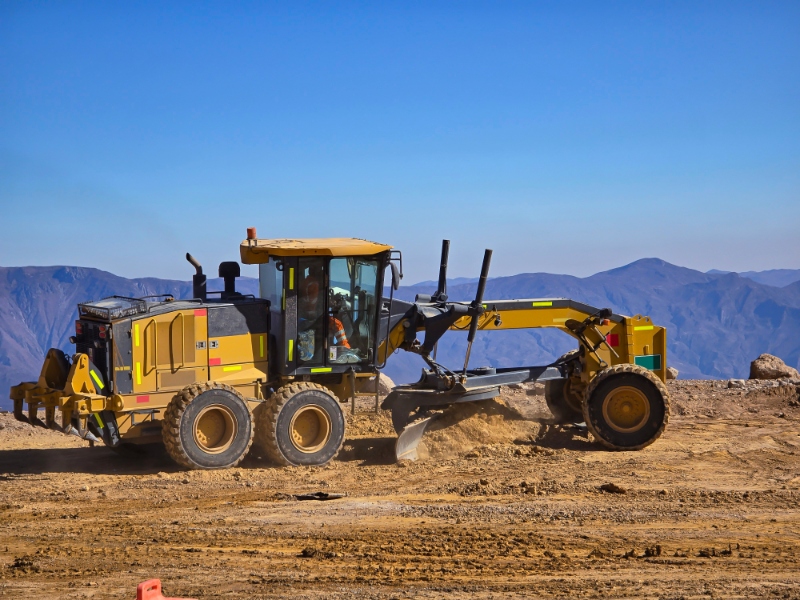
Definition:
A Motor Grader, also commonly known as a road grader, blade, or maintainer, is a heavy-duty machine employed across a spectrum of industries such as construction, roadwork, and mining. It is held in high regard by a diverse array of clients from small firms to major enterprises, as well as industry experts, for its precise grading abilities and versatility.
Fundamentally, a Motor Grader is characterized by a long, adjustable blade positioned between the front and rear wheels, used to create a flat surface during the grading process. The machine is designed to provide precision and accuracy, which makes it essential for the construction and maintenance of roads.
Key components of a Motor Grader include:
Articulated Frame: The machine is built around a pivotal frame, allowing the front and rear axles to move independently. This articulation enables enhanced maneuverability, particularly in tight spaces.
Blade or Mouldboard: This is the central component, located between the front and rear wheels. It can be raised, lowered, and tilted at various angles to cut, spread, and level the soil or other materials. Its length varies depending on the model and the specific grading requirements.
Engine and Transmission: Motor graders are usually powered by a diesel engine and have a transmission system that supports a range of speeds. The engine powers the machine’s movements and the hydraulic system that controls the blade.
Cab: This is the operating station where the operator controls the machine. It contains the steering wheel, levers to control the blade, and other operational controls.
Scarifier: Located ahead of the blade, the scarifier breaks up compacted material to facilitate grading. Not all models have a scarifier, but it’s a valuable tool for handling tough surfaces.
Motor Graders excel in tasks requiring high precision and consistency, such as creating sloped surfaces, setting finish grades, and constructing and maintaining roads. They are also employed for snow removal, in which the blade can be used to push snow aside.
When selecting a Motor Grader, key considerations include the nature of the task, working conditions, operational capacity, and the machine’s size. Their functionality and precise operation make Motor Graders a fundamental asset in multiple industries, thereby meeting the needs of a diverse client base.
They’re categorized according to operating weight, blade width, and the type of terrain they’re designed to handle. Here are five general classifications:
Small Motor Graders: Typically have an operating weight of up to 7,000 kg with a blade width of up to 2.5 meters. These are designed for smooth surfaces and used for light grading tasks.
Medium Motor Graders: Generally, weigh between 7,000 to 14,000 kg with a blade width of 2.5 to 3.5 meters. These are versatile machines used on various surfaces for grading and shaping in construction or maintenance tasks.
Large Motor Graders: Usually weigh between 14,000 to 20,000 kg, with a blade width of 3.5 to 4.5 meters. These graders are designed to handle more demanding tasks on both smooth and rough terrains.
Extra-large Motor Graders: Weighing between 20,000 to 25,000 kg, with a blade width ranging from 4.5 to 5.5 meters. These machines are designed for heavy-duty tasks on varied terrains, often found in large-scale road construction or mining settings.
Specialized Motor Graders: These are the heaviest in the category, often weighing over 25,000 kg with a blade width exceeding 5.5 meters. They’re used for intensive grading tasks in challenging conditions, capable of handling both smooth and rough terrains.
Health and Safety Considerations for Motor Graders
Operator Training: The operator should have appropriate training and competency to operate the Motor Grader, understand its controls, and be aware of potential hazards associated with its use. They should be familiar with the machine’s operating manual and any safety guidelines provided by the manufacturer.
Pre-Operation Inspection: Prior to operation, a thorough inspection of the Motor Grader should be performed to identify and address any mechanical issues. This includes checking the tires, brakes, hydraulic system, blade, scarifier, and other components.
Use of Safety Equipment: The operator must wear the appropriate safety gear, including a hard hat, high-visibility clothing, and safety boots. If the machine is equipped with a seatbelt, it should be worn at all times during operation.
Safe Operation: The Motor Grader should be operated at a safe speed, particularly on slopes or uneven terrain. The machine should be kept in gear when going downhill to maintain control. Sudden changes in direction or speed should be avoided as these can cause the machine to tip over.
Load Limits: The operator must understand the machine’s load limits and ensure they are not exceeded. Overloading the machine can affect stability and control, increasing the risk of accidents.
Working Around Utilities: When grading near underground utilities, the operator must be aware of their location to prevent damage. Similarly, caution must be exercised when working near overhead power lines.
Traffic Control: If the Motor Grader is operated near a public road or in an area with other equipment and vehicles, a traffic control plan should be in place to prevent collisions.
Maintenance: Regular maintenance checks and services should be conducted as per the manufacturer’s guidelines to ensure the machine remains in safe working order.
Emergency Response: Operators should know what to do in case of an emergency, such as how to quickly stop the machine and how to use the fire extinguisher if required.
Avoiding Bystanders: The work area should be kept clear of bystanders to prevent injury. The operator should always be aware of their surroundings and ensure the area is clear before moving the machine or adjusting the blade.
Never operate the Motor Grader under the influence of drugs, alcohol, or when feeling fatigued.